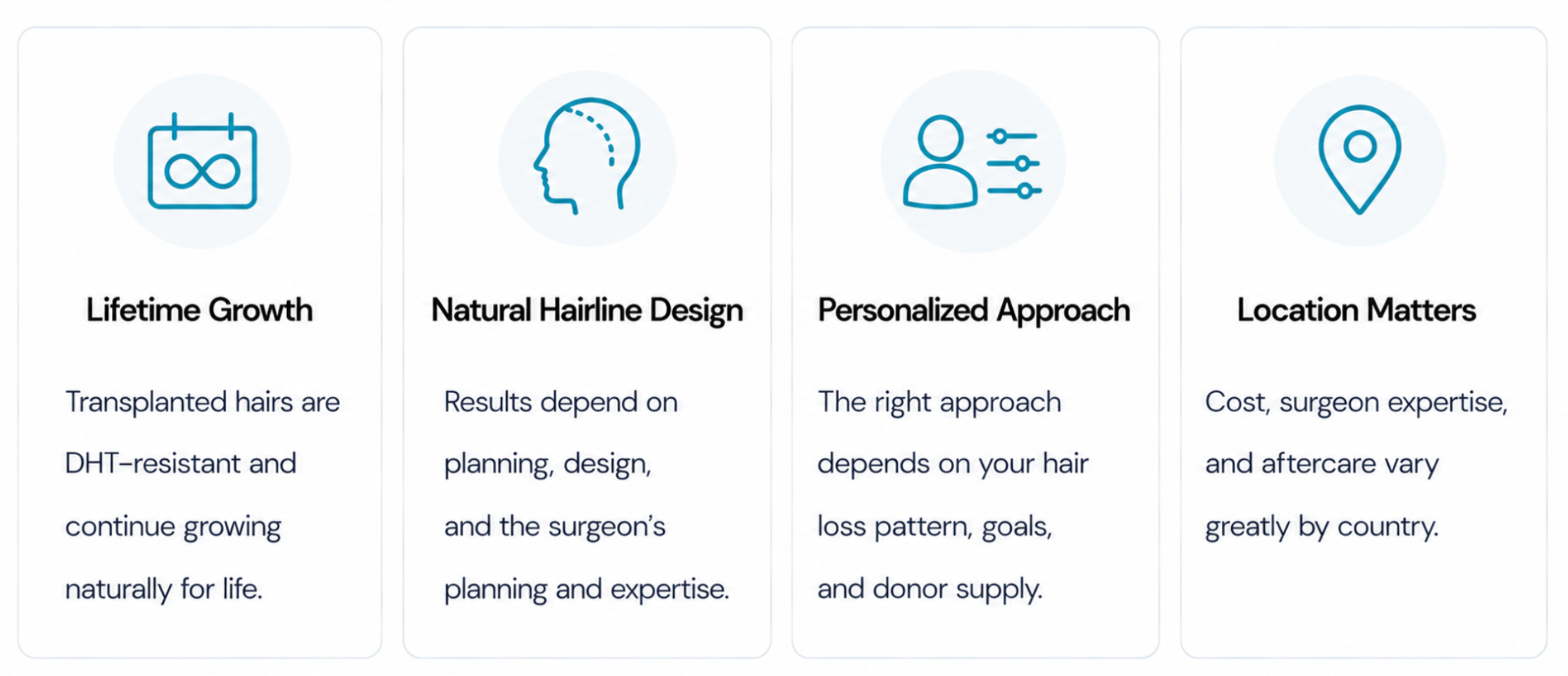
Yes, when done well, a hair transplant can look completely natural. The transplanted hair is your own hair, moved from one area of the scalp to another, so it grows and behaves just like the rest of your hair. What makes a result look natural is not the procedure itself, but how it is planned. Hairline design, graft placement, density, and the angles of the follicles all play a major role. A natural hairline should fit your age, facial features, and future hair loss pattern rather than simply recreating the hairline you had as a teenager. One of the biggest differences between providers is their ability to create results that look undetectable. The best transplants do not draw attention to themselves. They simply look like your natural hair.
Does a Hair Transplant Hurt?
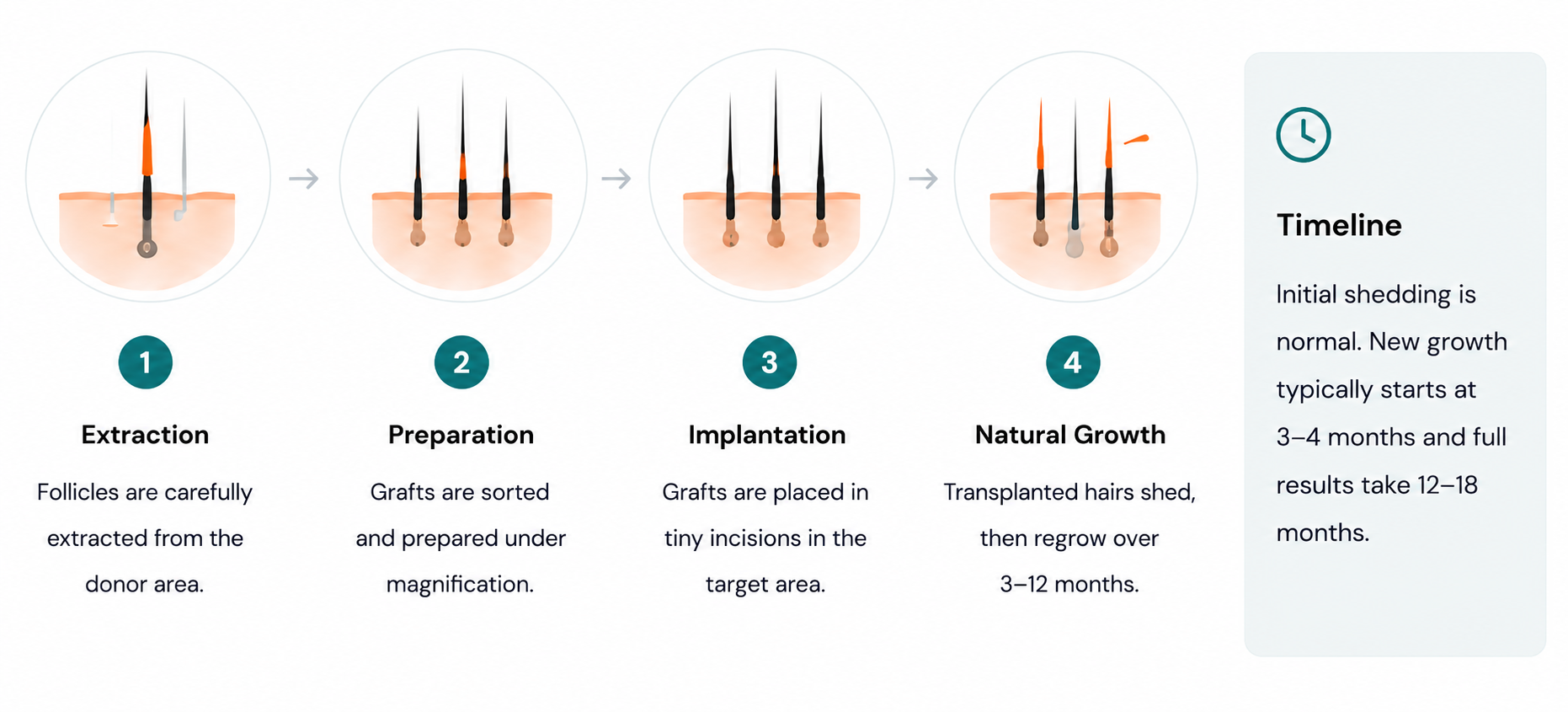
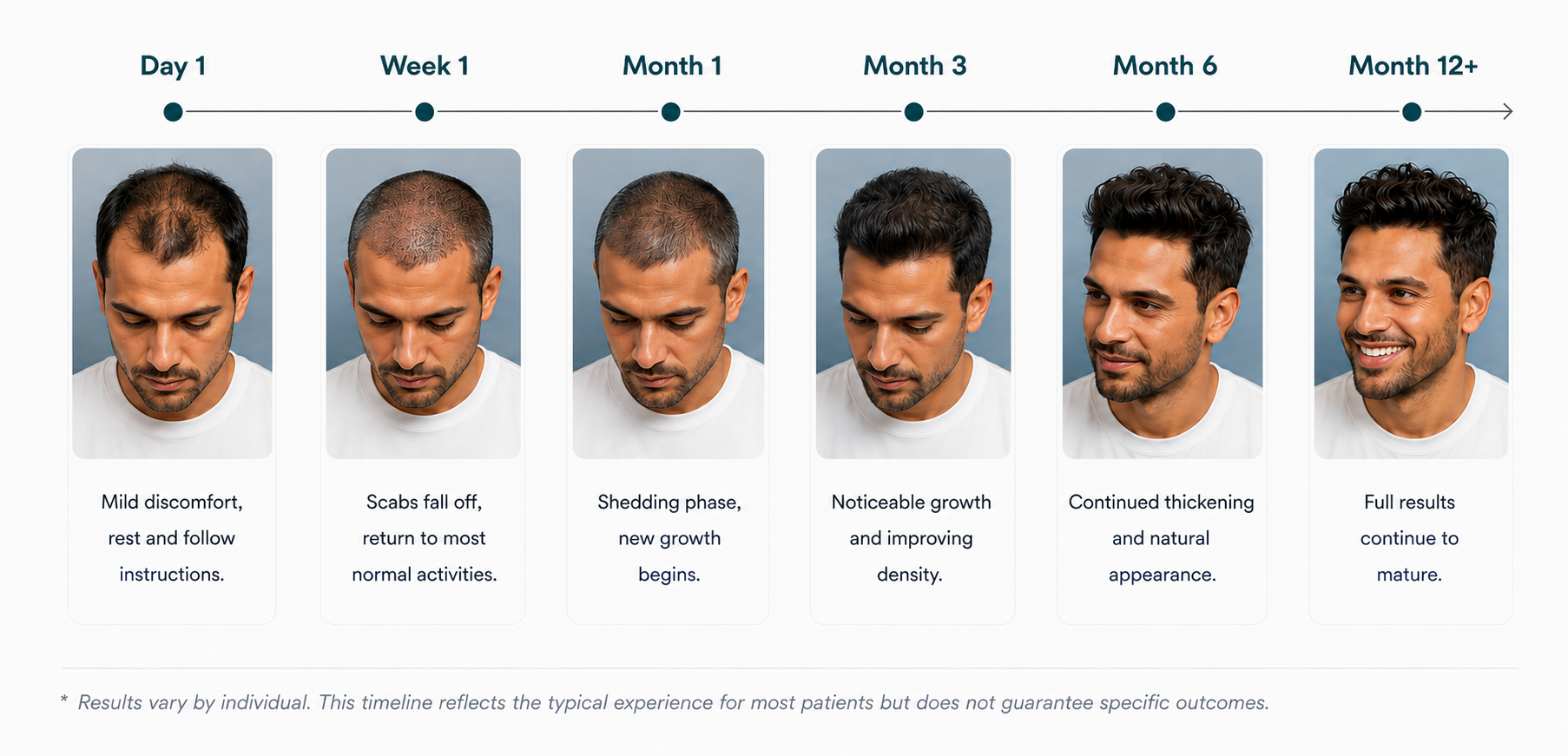
Most patients describe a hair transplant as uncomfortable rather than painful. The procedure is performed under local anesthesia. The numbing injections are often the most uncomfortable part. Once the scalp is numb, most patients tolerate the procedure well, and some even sleep through portions of it. After surgery, patients can expect: • Mild soreness or tightness for several days • Swelling during the first few days. • Small scabs during the first week • Temporary restrictions on strenuous exercise Many patients are surprised when the transplanted hairs shed a few weeks after surgery. This is a normal part of the process. New growth typically begins several months later.
What Does Recovery Look Like?
Recovery happens in stages, and the timeline is longer than most patients expect. • Days 1–14: Redness, swelling, and scabbing around the grafts. This is the visible healing phase and resolves on its own. • Weeks 2–4: The transplanted hairs shed. This surprises almost every patient, but it is a normal part of the cycle. The follicles remain active beneath the surface. • Months 3–4: New growth begins emerging. • Months 6–12: Continued improvement as density fills in. • Months 12–18: Final results fully mature. Aftercare during this period directly affects the outcome. Sleeping position, scalp washing, sun exposure, and medication all influence graft survival and final density. A clinic that becomes hard to reach after surgery is a problem at exactly the stage when guidance matters most.
Can a Hair Transplant Fail?
Yes, though "failure" can mean different things. A complete failure where no growth occurs is rare. More common are partial failures: lower density than expected, uneven growth, poor graft survival, or a hairline that looks unnatural once fully grown in. These problems are often difficult to recognize early because final results can take 12 to 18 months to develop. The most common reasons results fall short include: • Poor graft handling. Grafts are living tissue. How they are extracted, stored, and implanted directly affects survival. • Weak hairline planning. A hairline that does not account for facial structure, age, or future hair loss can look artificial even if the surgery itself was technically successful. • Donor overharvesting. Removing too many grafts can permanently thin the donor area, creating visible gaps and limiting future options. • Poor aftercare. Recovery does not end when the procedure is over. Inadequate aftercare instructions can affect healing and final density. • Poor timing. A transplant performed while hair loss is still progressing rapidly may look balanced initially but appear uneven a few years later as surrounding hair continues to thin. Most disappointing outcomes can be traced back to decisions made before surgery: choosing the right clinic, creating a realistic long-term plan, and understanding what results are actually achievable.
How Many Grafts Will I Need?
A graft is a naturally occurring group of one to four hair follicles. The number needed depends on how much area needs coverage and the density the patient wants to achieve. As a rough reference: • 1,000 to 2,000 grafts for a mild hairline recession • 3,000 to 5,000 or more for significant coverage across the crown and top of the scalp. These numbers only tell part of the story. The donor area contains a finite number of follicles and cannot be restocked once used. A graft count should always be considered alongside total donor supply, not just the immediate need. A clinic that quotes a number without discussing donor capacity is only answering half the question. Strong clinics think about how to distribute that supply across a patient's lifetime, not just the first procedure.
Will I Need Another Procedure Later?
Possibly, and it is worth planning for that from the start. A transplant addresses existing hair loss. It does not stop future loss in untreated areas. As loss continues with age, additional coverage may be needed, requiring more grafts from the same limited donor supply. A surgeon who manages the donor area conservatively in the first procedure preserves options for the future. One who extracts aggressively may leave little to work with if further sessions are needed later. This is one of the things patients most commonly say they wish they had asked before their first procedure
How Do I Choose A Qualified Clinic?
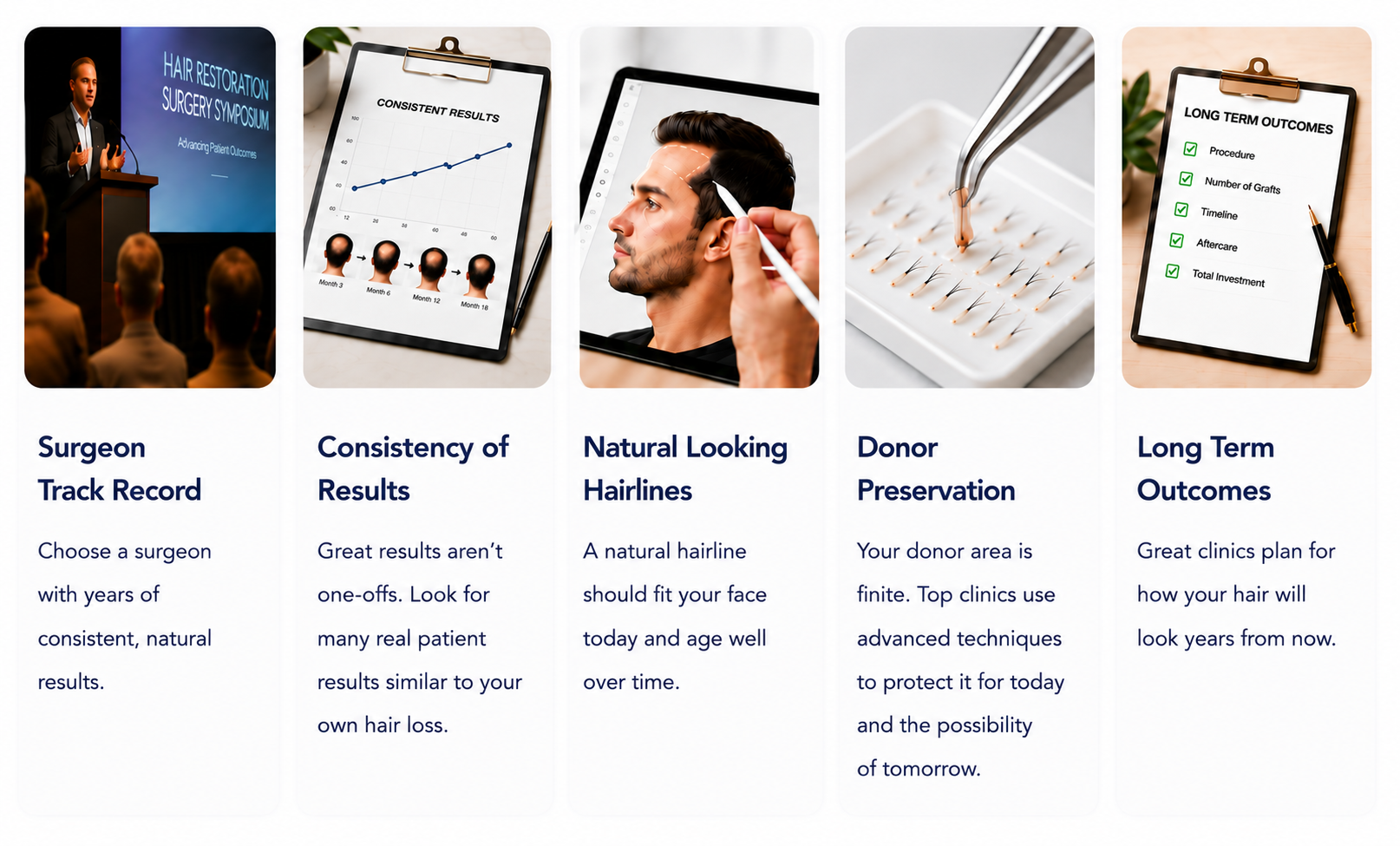
The answer is usually not on a clinic's Instagram page. Reviews, follower counts, and before-and-after photos are the most visible signals and often the least reliable. Many reviews are written before patients leave the clinic, rating the experience rather than the final result. Photos are selected by the clinic. Influencer videos are often filmed weeks after surgery, long before meaningful growth has occurred. Some of the biggest warning signs include: • Heavy sales pressure • Guaranteed graft counts before a proper evaluation • Extremely aggressive hairline designs • Little discussion about future hair loss • A primary focus on price rather than long-term planning. The signals that matter most take more effort to find: • Consistently documented results at 12 months or beyond • Independently verifiable surgeon credentials • Clear explanations of who performs each stage of the procedure • Evidence of thoughtful donor management and long-term planning The best clinics usually spend more time discussing limitations, future hair loss, and realistic expectations than making marketing promises.